
A new (open access) paper led by former PhD student Hongyu Zhang (now at UMass Amherst) and co-authored by Grant McKenzie, has been published in Digital Geography and Society.
The study examines how Weibo users responded to a 2022 policy mandating that IP-based location information be automatically appended to all posts and comments on the platform. Analyzing over 59,000 microblogs and 113,000 comments collected between March and May 2022, our team used a combination of LDA topic modelling and qualitative thematic analysis to uncover the dominant attitudes toward this involuntary location disclosure.
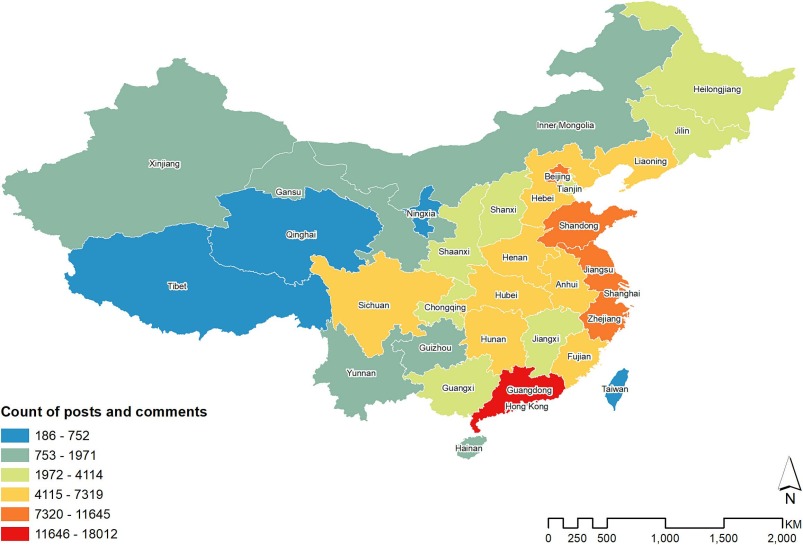
Three broad camps emerged from the discourse: supporters who viewed the feature as a tool for combating disinformation and promoting online accountability; opponents who raised concerns about privacy invasion, regional discrimination, and censorship; and a third group largely indifferent to the change. Notably, female users were disproportionately active in the discussion, and engagement was concentrated in economically developed eastern regions.
The paper develops six theoretical propositions around what we call dynamic geoprivacy attitudes… the idea that privacy concerns are not fixed, but shift in response to cultural norms, political events, geographic granularity, and time.
The work is the first study to directly analyze Chinese public opinion on involuntary location disclosure using social media discourse, and contributes a non-Western perspective to ongoing conversations in digital geography about surveillance, consent, and the right to spatial privacy.