
In our latest paper in the Journal of Geovisualization and Spatial Analysis, lead by doctoral researcher, Dan Qiang, we take on a question that’s surprisingly underexplored: how do special events causally affect shared micromobility use (e-bikes and e-scooters)? As cities lean more on shared micromobility to support sustainable travel, understanding these dynamics becomes critical.
Using Washington, D.C. as our case study, we combine 9.5 million Lime e-bike and e-scooter trips with three rich sources of event data:
-
Government-authorized large events (parades, marathons, major festivals)
-
Independently organized small events (local shows, workshops, micro-festivals)
-
Government-registered protests
Rather than relying on simple before/after comparisons, we use Double Machine Learning (DML) to estimate causal effects. This framework lets us control for weather, season, gas prices, built environment, and local sociodemographic factors, so we can isolate what the events themselves are doing to micromobility demand.
What we found
-
Events substantially increase micromobility use – far more than correlations alone suggest. Both small and large events boost shared micromobility, but large events have more than 25× the impact of small ones. For festivals, our causal estimates of ridership increases are four times (large festivals) and seven times (small festivals) larger than what standard correlational methods would indicate.
-
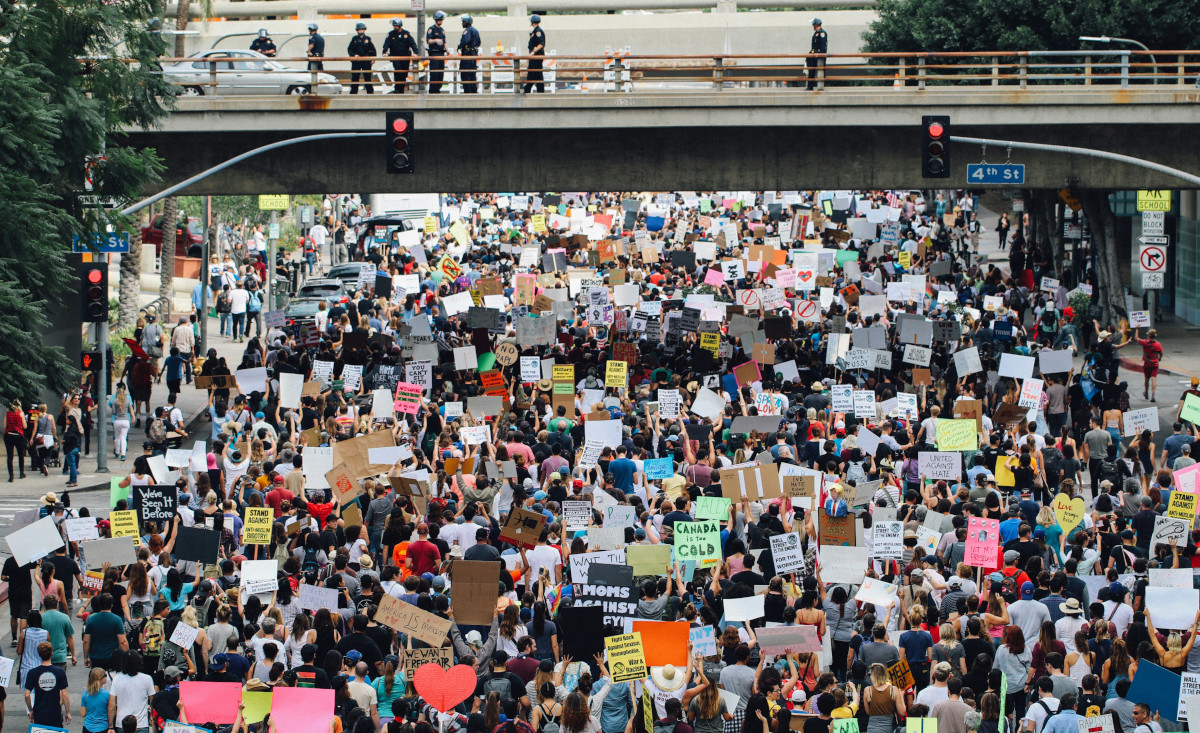
Protests aren’t as disruptive as they first appear. At a correlational level, protests seem to decrease trip volumes. Once we control for confounding factors, we find no statistically significant causal effect. The apparent drop is largely due to where protests are held (areas with lower baseline demand and infrastructure), not the protests themselves.
-
Different types of events work through different mechanisms.
-
For large events (parades, major festivals, large entertainment), micromobility demand is driven by the interaction of event scale, seasonality, and infrastructure. Features like bike lanes, sidewalk area, and proximity to transit have a strong causal influence.
-
For small events, demand is driven mainly by time and weather, event duration, season, temperature, and holidays, while built environment and socio-demographic factors play a minimal causal role.
-
-
Gas prices behave in a counterintuitive way. Although long-term studies often show higher gas prices encouraging micromobility, we find that during events, rising gas prices actually suppress shared micromobility usage. Our interpretation is that for many optional trips, people choose not to travel at all when costs rise, rather than immediately shifting modes on event days.
Why this matters for cities
From a planning and policy perspective, our results suggest:
- For large events, cities should prioritize infrastructure upgrades in event zones—continuous bike lanes, wider sidewalks, and better connections to transit hubs. These features causally amplify micromobility demand and help manage crowds without adding more cars.
- For small events, operational strategies matter more than new infrastructure. Fleet rebalancing, dynamic pricing, and ensuring vehicle availability are likely to have greater impact than capital-intensive projects.
- For analysis and decision-making, our work underscores that correlation is not enough. Relying solely on correlational models can underestimate the value of major cultural events and misattribute effects to protests or built environment features. Causal tools like DML are essential for accurately identifying what truly drives demand.
Although our case study is Washington, D.C., the framework we develop is portable to other cities and modes wherever high-resolution trip data and event records are available.
The full paper is available here: https://link.springer.com/article/10.1007/s41651-025-00244-1